
Introduction
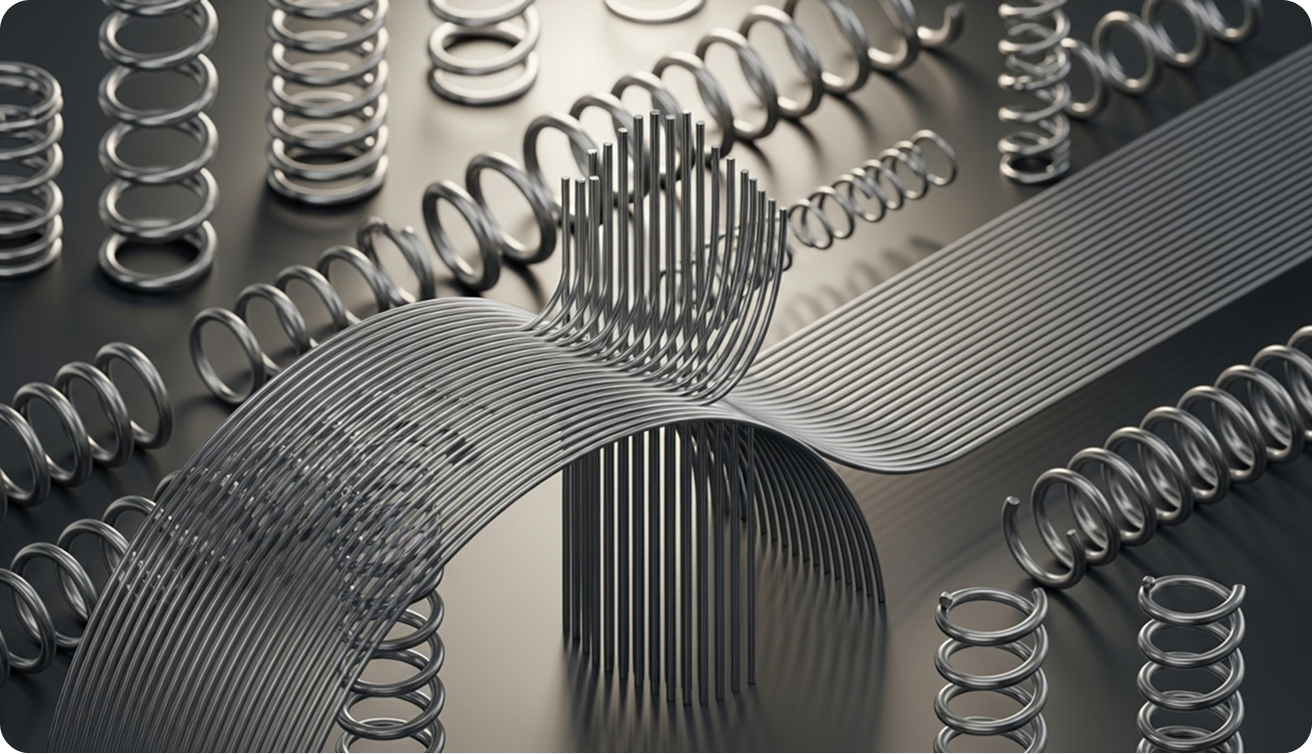
Springs are everywhere—from car suspensions to aerospace actuators and even in the tiniest medical devices. But what determines how well a spring performs? The answer lies in the uniformity of wire diameter.
Even the smallest inconsistencies in wire thickness can alter spring stiffness, reduce fatigue life, and cause catastrophic failures in critical applications. In industries like aerospace, defense, and medical technology, reliability is non-negotiable, making precision wire for springs essential.
Why Diameter Uniformity Matters
- Mechanical Consistency: Spring stiffness is highly sensitive to wire diameter. Even small deviations can significantly alter the load-bearing capacity.
- Fatigue Resistance: Non-uniform wires create stress points, leading to premature breakage.
- Dimensional Accuracy:Consistent diameter ensures springs maintain designed lengths and forces.
The Role of Wire Drawing
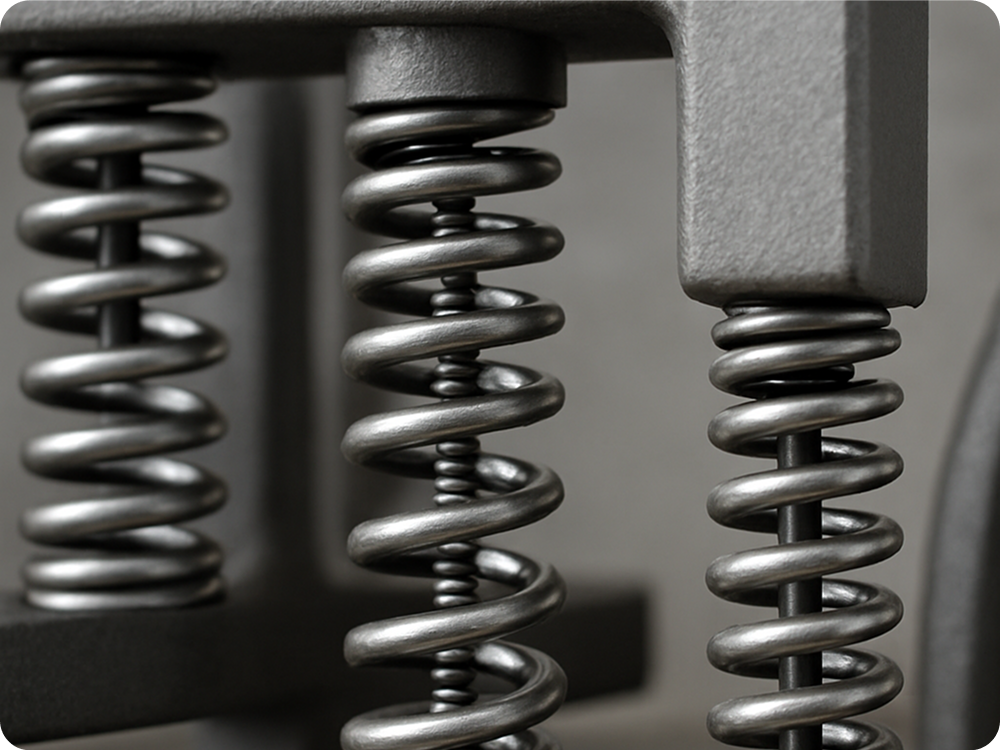
Wire drawing is the process of reducing metal rods into spring wire. The challenge lies in controlling friction, temperature, and die wear—all of which impact diameter. Advances such as nano-coated dies, polycrystalline diamond dies, and IoT-enabled monitoring systems ensure tighter control, yielding spring wire consistency critical for performance.
Real-World Impact
- Automotive:Uniform wire diameter reduces suspension spring rejection rates, lowering warranty costs.
- Aerospace: Precision wire extends spring fatigue life, ensuring mission-critical reliability.
- Medical: Micro springs in surgical devices depend on wire drawn to micron-level accuracy.
Market Trends
- Miniaturization:Electronics and medical devices require micro springs with ultra-precise wires.
- Advanced Materials: High-performance alloys demand better diameter control.
- Smart Factories: Real-time monitoring and predictive analytics are redefining spring manufacturing.
Closing Thought
Uniform wire diameter is no longer a quality improvement—it’s a strategic necessity. With advancements in die solutions and precision wire drawing, industries are moving toward zero-defect spring manufacturing. The future lies in smarter, more sustainable, and data-driven spring production.