Introduction
In today’s fast-evolving energy landscape, efficiency in power cable manufacturing is more than just a production benchmark—it is a necessity for meeting global demand, reducing costs, and supporting sustainable infrastructure. At the heart of this efficiency drive lies a crucial innovation: zero-rejection dies.
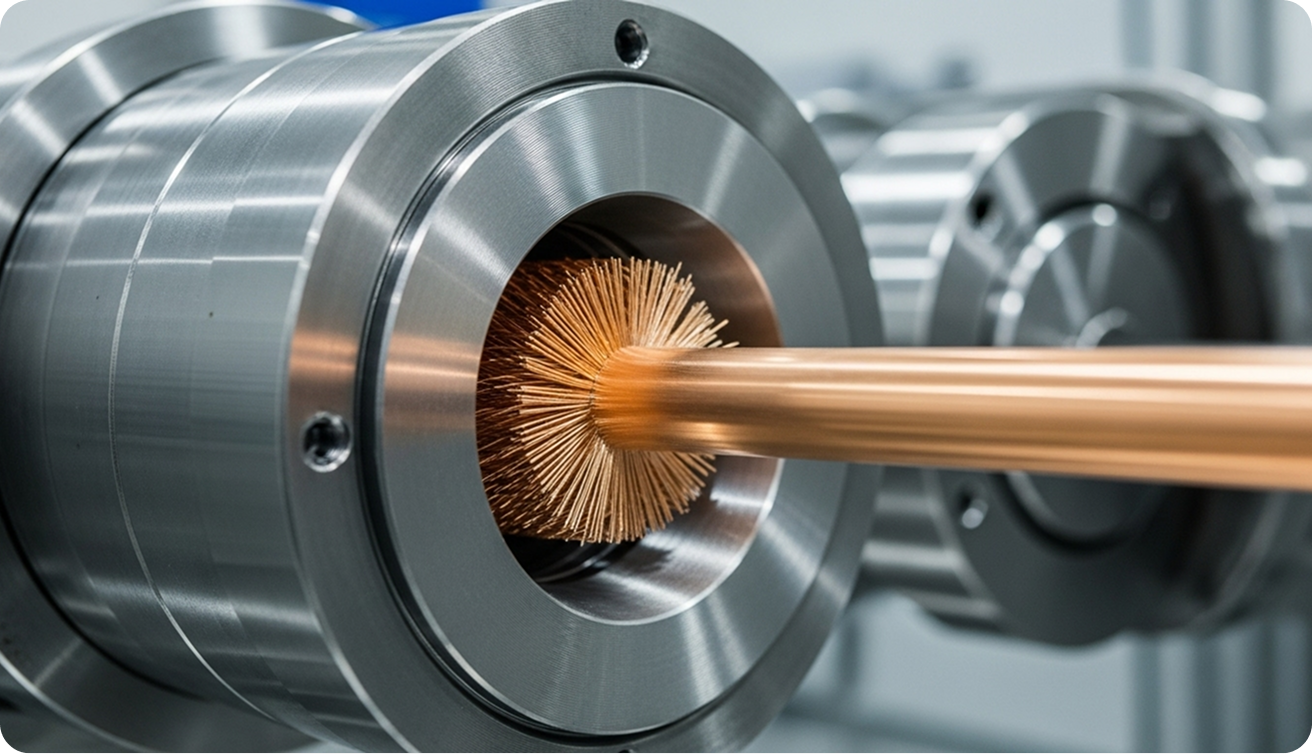
Wire drawing, the process of reducing raw copper or aluminum rods into fine conductors, is the foundation of power cable manufacturing. Yet traditional dies often lead to rejections caused by wear, misalignment, or material defects. These inefficiencies result in wasted material, downtime, and inconsistent conductor quality—ultimately impacting the reliability of power transmission systems.
Zero-rejection dies, engineered for precision and longevity, have emerged as a game-changing solution. By virtually eliminating scrap and reducing variability, they are helping manufacturers achieve higher throughput, lower costs, and more reliable cables for modern power grids.
Key Challenges in EV Wire Applications
The traditional approach to wire drawing is plagued by high rejection rates. Even minor defects in dies can cause conductor inconsistencies, increasing scrap, downtime, and energy consumption. In contrast, zero-rejection dies are designed to deliver:
- Near-perfect precisionin shaping conductors.
- Minimal scrap generation,saving both material and energy.
- Extended tool lifelowering replacement and maintenance costs.
- Improved cable reliability,critical for high-voltage applications.
These benefits make zero-rejection dies a cornerstone of next-generation smart cable manufacturing.
The Technology Behind Zero-Rejection Dies
- Advanced Die Materials
- Polycrystalline Diamond (PCD) Dies: Extremely hard and resistant to wear, ensuring longer lifespans.
- Nanometer Coatings: Reduce friction and heat, improving surface finish and extending die performance.
- Tungsten Carbide Hybrid Dies: Economical with added diamond inserts for durability.
- Die-Talent Mobility and Automation
- Modern wire plants are moving toward IoT-enabled dies, which monitor temperature, vibration, and wear in real-time.
- Coupled with AI-driven predictive maintenance, these systems can anticipate die failures before they occur, reducing downtime.
- Lubrication and Process Optimization
- Zero-rejection dies rely on optimized lubrication systems, often enhanced with nanotechnology, to minimize friction, prevent overheating, and ensure consistent conductor dimensions.
Real-World Applications and Case Studies
- Europe (Germany): A major cable producer reported an 18% increase in throughput and 25% cost reduction after switching to PCD zero-rejection dies for aluminum conductor manufacturing.
- North America (USA): A leading aluminum extrusion firm reduced scrap rates by 40% while producing aluminum conductors for rural electrification projects with zero-rejection dies.
- Asia-Pacific (India): Zero-rejection dies enabled consistent fine-wire drawing for EV motors and 5G telecom cables.
- Middle East (Saudi Arabia): In line with its smart grid initiatives, a UAE-based company implemented nano-coated dies, producing ultra-reliable conductors supporting EV infrastructure and renewable energy.
Enterprises adopting zero-rejection dies deliver both economic and performance benefits, making them integral to today’s competitive manufacturing environment.
Market Trends Driving Adoption
- Rising Demand for High-Voltage Cables
- Global renewable energy projects require high-voltage cables with minimal losses. Zero-rejection dies ensure the precision needed for offshore wind farms, solar farms, and HVDC transmission.
- Regional Growth Patterns
- Europe: Focused on underground urban smart grids.
- Asia-Pacific: Largest adoption base, driven by infrastructure growth in India and China.
- Middle East & Africa: Gaining traction in mega-projects such as Saudi Arabia’s NEOM.
- Sustainability Imperatives
- Lower rejection supports circular economy goals.
- Lower friction in drawing reduces energy consumption.
- Companies adopting advanced dies benefit from green branding in competitive markets.
Challenges in Implementation
While promising, adoption of zero-rejection dies comes with hurdles:
- High Initial Investments: Advanced dies are costlier upfront.
- Training Requirements: Operators need retraining to digital monitoring systems.
- Standardization gaps as die performance varies across different conductor materials (copper, aluminum, alloys).
Overcoming these challenges requires strategic investments in technology, workforce upskilling, and industry-wide standards.
The Road Ahead
The future of zero-rejection dies lies in further integration with digital technologies and sustainability goals:
- Hybrid Conductor Materials: Seamless manufacturing of copper-clad aluminum (CCA) conductors.
- AI-Integrated Smart Factories: Machine learning algorithms predicting die performance and rejection probabilities.
- Predictive and Smart Factories: Machine learning algorithms predicting die performance and rejection probabilities.
- Eco-Friendly Manufacturing: Recyclable die substrates and sustainable coatings.
- Global Certifications: New ISO standards for zero-rejection performance.
Closing Thought
Zero-rejection dies represent more than an incremental improvement—they signify a paradigm shift in power cable manufacturing. By eliminating waste, ensuring precision, and reducing operational downtime, they are enabling manufacturers to meet the dual challenges of growing global demand and sustainability commitments.
As the world transitions toward renewables, smart grids, and electrified transport, innovations like zero-rejection dies will be critical in ensuring reliable, efficient, and future-ready power transmission infrastructure.